Culture in Media & Conflict
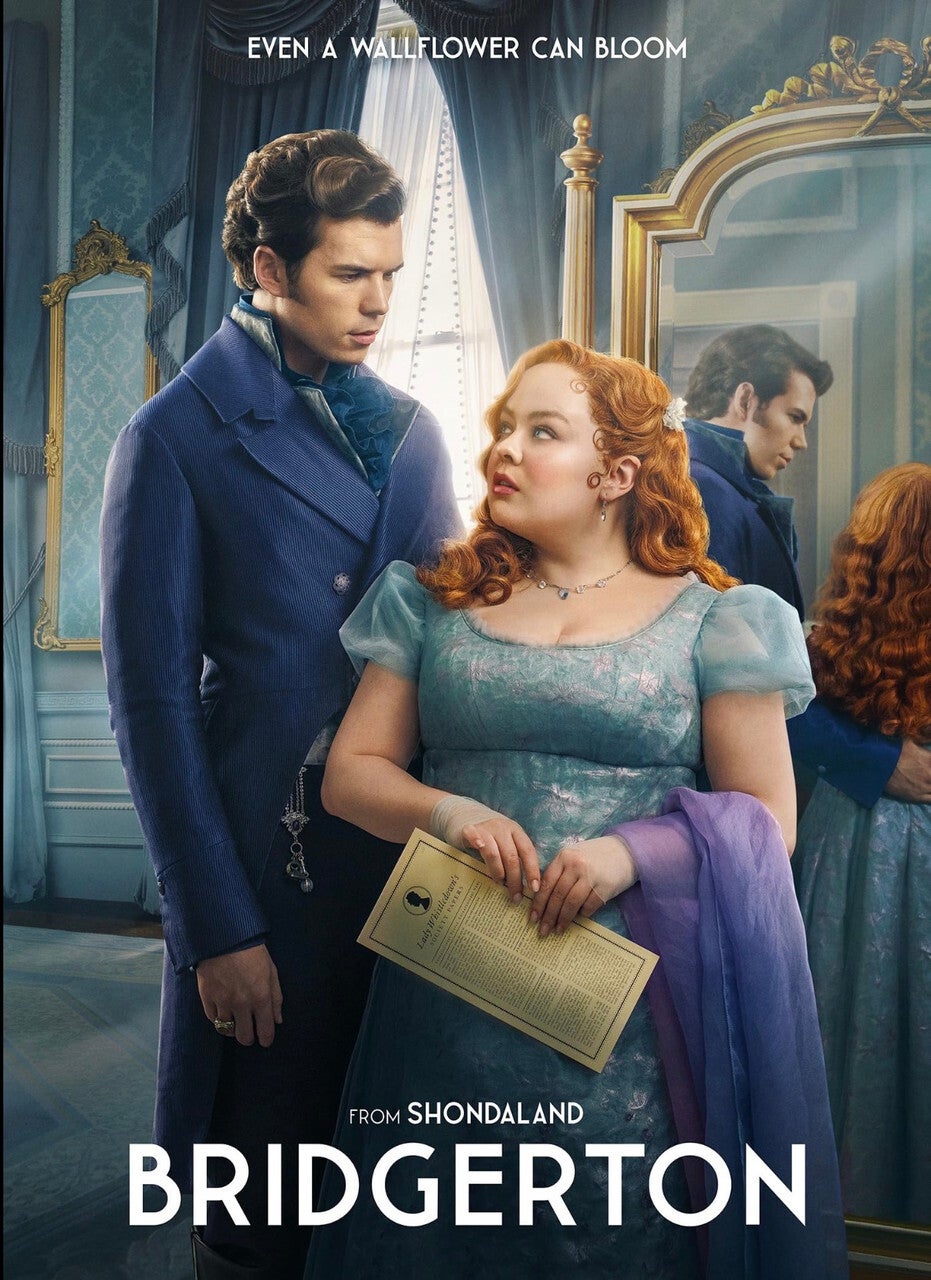
Bridgerton - Season 3 Episode 2 & 3
Casual POV
-
Some people are not born into upper class but rather inherits it
-
Newspaper seemed like a physical copy of gossip
-
True romance was rare
-
Getting married had a limit before you were considered on the shelf
-
Mothers were the ones who forced the marriage market onto their children
-
Why can't that style of dresses come back in style?
-
Love is unexpected - Sometimes you don't know you've fallen under its trap till its too late
The Episodes Analyzed
-
Representation
-
Portrayal of Cultural Groups
-
The show presents a racially integrated aristocracy, blending Black and white characters into Regency‑era high society.
-
Characters of color (e.g., Queen Charlotte, Lady Danbury, the Mondrich family) are portrayed as powerful, wealthy, and socially influential.
-
The series uses a reimagined multicultural Britain, not historically accurate, but symbolically representing inclusion and social mobility.
-
-
Culturual Values, Symbols, and Communication Styles
-
High‑context communication dominates: indirect speech, subtle gestures, and social rituals (balls, calling cards, promenades).
-
Honor, reputation, and propriety function as cultural values shaping behavior.
-
Nonverbal cues—glances, posture, dance etiquette—carry significant meaning.
-
The show emphasizes collectivist values (family duty, social expectations) over individual desires, especially for women.
-
-
-
Intercultural Conflict
-
Moment of Conflict (Season 3, Episodes 2-3)
-
Penelope and Collin experience a misunderstanding rooted in social hierarchy and gender norms.
-
Penelope’s desire for independence clashes with Collin’s assumptions about her role and capabilities
-
-
This is NOT ethnic intercultural conflict, but cultural conflict between social groups (gendered expectations, class boundaries, insider vs. outsider status)
-
-
Conflict Classification (Chapter 8)
-
Value Conflict: Penelope values autonomy and reinvention; Collin values tradition and social reputation
-
Affective Conflict: Hurt feelings arise when Penelope overhears Collin saying he would “never court her,” creating emotional tension
-
Goal Conflict: Penelope seeks marriage for security; Collin seeks to protect her without realizing he is undermining her goals
-
-
Conflict styles observed
-
Penelope – Accommodating → Discussion style: She initially avoids confrontation, then shifts to direct but calm communication.
-
Colin – Engagement style: He becomes more expressive, emotional, and assertive when trying to “fix” things.
-
Lady Featherington – Dynamic style: Uses dramatic persuasion, emotional appeals, and manipulation to influence outcomes.
-
Eloise – Discussion style: Direct, logical, and verbally explicit when addressing conflict with Penelope.
-
-
-
-
Context & Power
-
Social, Economic, and Historical Influences
-
The aristocratic setting reinforces power imbalances based on class, gender, and reputation
-
Women’s limited economic independence shapes Penelope’s desperation to secure a marriage
-
Characters of color hold high status, but their power is framed as granted by the monarchy, reflecting a delicate balance rather than full equality
-
-
Evidence of Cultural Imperialism or Media Bias (Chapter 7)
-
Culture Imperialism
-
The show imposes modern multicultural ideals onto a historically white Regency England, which can be seen as rewriting history through a contemporary Western lens.
-
It promotes a narrative where racial integration is normalized without addressing historical oppression—an example of aesthetic inclusion without structural critique.
-
-
Media Bias
-
The series prioritizes romanticized, idealized depictions of diversity rather than realistic portrayals of intercultural tension.
-
It reinforces Western beauty standards, wealth, and aristocratic norms as desirable cultural ideals.
-
-
-
-
Reflect and Connect
Dearest gentle reader
My interpretation of Bridgerton Season 3, Episodes 2 and 3 was shaped strongly by my own cultural background and my belief that romance can conquer all. Because I tend to view relationships through an optimistic, emotionally driven lens, I watched Penelope and Colin’s growing tension expecting that their misunderstandings would eventually be resolved through genuine affection. This made me interpret their conflicts—especially Colin’s dismissive comments in Episode 2 and Penelope’s hurt silence in Episode 3—less as insurmountable barriers and more as narrative steps toward emotional reconciliation.
Looking back, I can see that this hopeful lens created some bias in my initial reaction. I focused heavily on the romantic payoff and less on the deeper cultural dynamics at play, such as the rigid gender expectations and class‑based pressures that shape their communication. Because I wanted their relationship to succeed, I initially minimized how much power imbalance influenced Penelope’s choices and how Colin’s protective behavior sometimes reinforced social norms rather than challenging them.
If I were a mediator or producer, I would modify the portrayal by making these cultural tensions more explicit. For example, adding scenes where Penelope directly articulates how class and reputation limit her agency would highlight the structural barriers she faces. I would also include moments where Colin actively listens and adapts his communication style, modeling healthier conflict resolution. These changes would promote peacebuilding by showing that love alone isn’t enough—mutual understanding, dialogue, and respect are equally essential for bridging cultural divides.
Reference Page
Movies R Us. (n.d.). Bridgerton – Season 3 [Blu‑ray cover image]. MoviesRUsA. https://moviesrusa.biz/bridgerton-season-3-blu-ray/